


The First Agricultural Revolution began approximately 12,000 years ago.
And as alluded to in Posts 1 & 2, this was a period of dramatic, humanity-shaping change.
We’ve since had a second one.
The “Second”, or “British” Agricultural Revolution began in the mid 1600’s — a full century before the economic transformations that later became known as the Industrial Revolution.
Though perhaps less revolutionary than the First, the Second Agricultural Revolution also came to fundamentally change how humans use their Time.
Sharp increases in land and labor productivity, combined with the enclosure and privatization of “common” land, caused British Food production to soar.
The availability of cheap and plentiful Food spurred massive population growth, a precursor to the industrial changes that would soon follow.
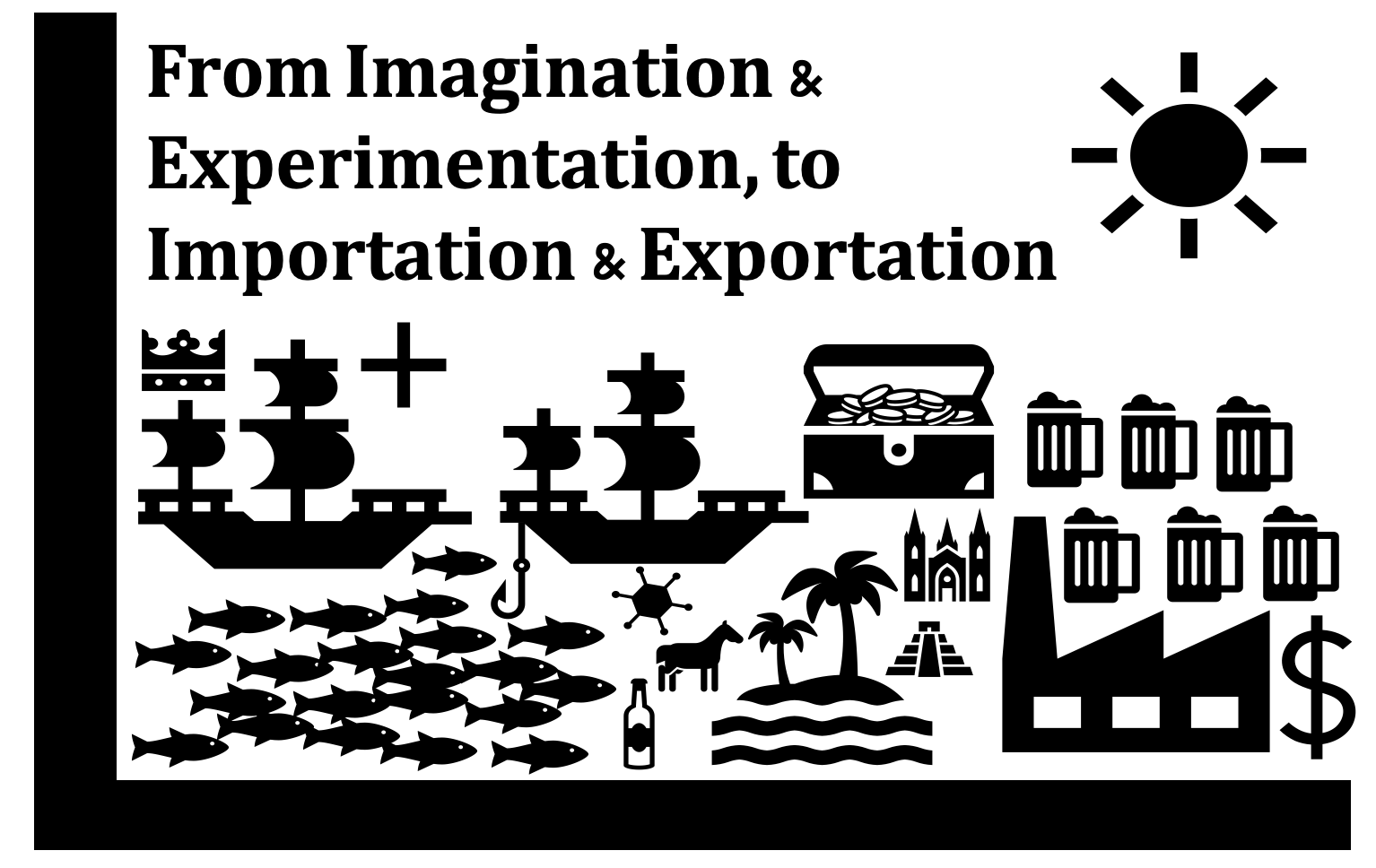
The British Empire’s subsequent global preeminence can be traced to these earlier agricultural improvements. They dominated the seas and controlled all channels of passage between Britain and her overseas colonies.
Though hardly a “free market” and certainly not “fair-trade”, the purpose of this hegemonic, global shipping network was to exchange goods in foreign lands.
These goods were often Food.
Whether it was salted cod fish from Newfoundland, cane sugar from the Caribbean, or Indian spices, British citizens had unprecedented access to foreign goods — which could be neither produced nor found at home.
Military and manufacturing supremacy allowed British merchants to secure favorable deals abroad by offering goods that could be cheaply produced at home, but were coveted elsewhere (e.g., guns and alcohol).
This was highly profitable for British merchants, who could then fund further voyages.
Given the lack of refrigeration and their vulnerability to Time, only certain Foods could be exported around the world on British ships.
Despite these technical challenges, however, the importation of exotic Foods became a European trend as Dutch, French, Portuguese and Spanish fleets each developed their own trading networks. As global trade intensified, each of these nations’ wealthier citizens began to consume an ever-expanding selection of imported Foods.
All these goods had prices: the amount of Money required to receive the item.
The more Money you had, the greater your options.
This was all very different from hunter-gatherer life, where both Money and commercial variety were lacking. Social status may still have determined the specific allocations of Food, but all tribe members were essentially eating the same plants and animals.
Money may be a primary marker of social status today, but what commanded respect and warranted prestige amongst hunter-gatherers was the use of Time to directly acquire Food for their group.
And this Food was always meant to be eaten rather than to be sold for Money.
While European citizens were beginning to source their Foods from all around the world, a hunter-gatherer’s life was dominated by the direct acquisition of locally available Food.
Some people still maintain small vegetable gardens, and many humans work in the Food production industry, but modern humans now access the Foods that we eat only indirectly:
We exchange our Time for Money, and we exchange our Money for Food.
We will return to the concept of Money later.
For now, we must only remember that Money is how humans intermediate between that which we possess (our Time), and that which we require (Food).
The First Agricultural Revolution was all about going “from zero to one”:
We discovered entirely new ways of using our Time to acquire Food, allowing us to break free from our nomadic pasts by means of cities and stored Food surpluses.
The Second Agricultural Revolution was more about going “from one to many”:
Advances in science and technology made agriculture a highly profitable commercial activity, transforming British land ownership from a symbol of prestige for the nobility to a serious matter of production and profits for the merchants.
From this latter group’s perspective, it was Money that could now be willed out of the ground.
This shift in mindset that started with a small group of wealthy British landowners would soon spread to many other parts of the world.
In the ensuing centuries, our species’ relationship with land was irreversibly changed.
We shifted from using “common” land to acquire different Foods for the purpose of our nourishment — to using a combination of private land, Money, and human labor (Time), to produce a single type of Food that could be profitably exchanged for Money.
The Second Agricultural Revolution and the global ascension of private property have made the concept of Money irreversibly fundamental to human life.
We can no longer be hunter-gatherers.
Next Post: Why Money Belongs Alongside Time & Food in The Algebra of Life